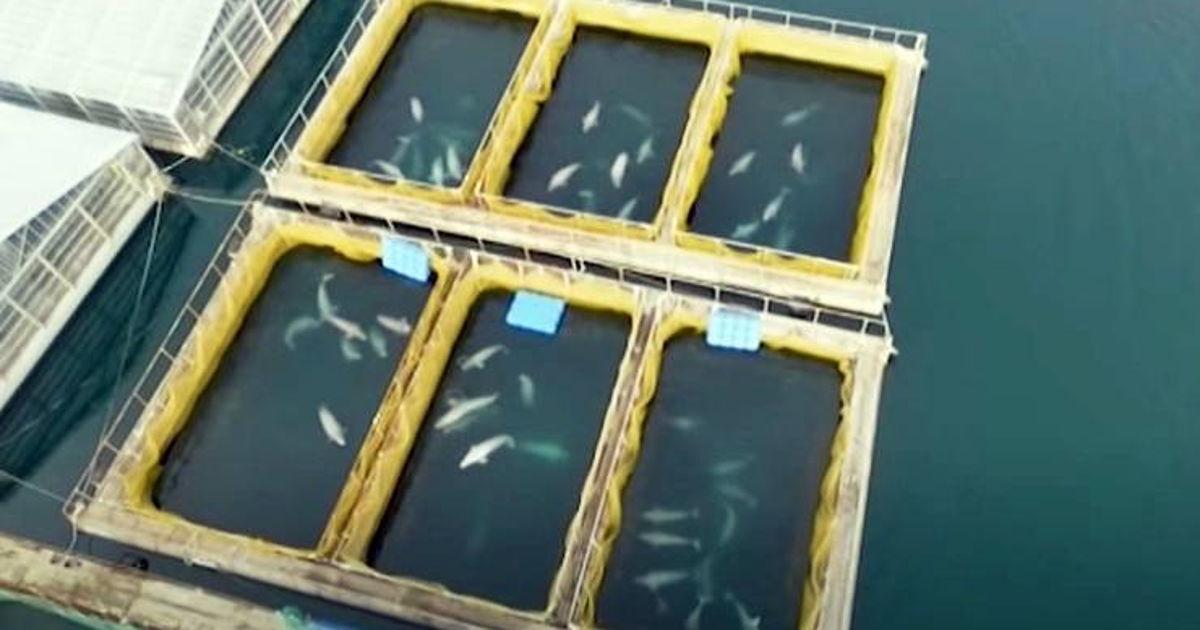

International regulations dictate that the capture of whales is only permitted for scientific or educational purposes. However, the illegal practice of selling these animals to theme parks is widespread, disregarding these laws. Exploiting a peculiar loophole, companies have found ways to rent out whales, enabling poachers to continue their illicit trade.
Investigations conducted by local media, including Novaya Gazeta, have uncovered that the companies responsible for the captivity of this large group of whales had sold 13 orcas to Chinese theme parks between 2013 and 2016. These findings shed light on the illegal activities carried out by these entities.
Prosecutors are currently seeking evidence to substantiate claims that the poachers are not holding the cetaceans for educational or research purposes, despite the companies’ assertions to the contrary. The Greenpeace Organization in Russia has described the conditions in which the whales are kept as tantamount to torture. Earlier this year, the companies obtained permission to capture an additional 13 whales.
Experts suspect that the enclosures may also contain infant whales, given the size of these “prisons.” This practice is unequivocally prohibited under international law without any exceptions. The large-scale capture of whales raises concerns about the heightened risk of endangering these species. However, National Geographic reports that as of November 10, 2019, the Russian government had released all 97 animals. The Whale Sanctuary project expressed its relief in a statement, urging the government to continue monitoring the belugas due to their vulnerable status. The statement also highlighted the need for protection against potential repeat capture and threats from North Korean fishing vessels, known to engage in poaching in the area


