

Péronne Goguillon, a French woman residing in the town of Bouvignies, experienced an attempted rape in the late 17th century by drunken soldiers who had arrived in her small community. The four men kidnapped and extorted her, demanding money in exchange for leaving her alone. When her husband tried to report the incident to the authorities, Goguillon was accused of witchcraft. She was subjected to psychological torture to force a confession for crimes she had not committed. Ultimately, she was sentenced to death by burning at the stake, with her body only partially burned so that her remains would serve as a warning to the community.
This story of false accusations is not unique. Between the 16th and 18th centuries, thousands of women (and some men) were accused of making pacts with the Devil across Europe, especially during the period between 1560 and 1630, known as the “Great Witch Hunt.” Real people with names and identities fell victim to what historians call “demonomania”: Anna Göldi, considered the last witch executed in Europe; Margarete Krevetsiek, accused of trying to teach her tricks to a young girl; or Walpurga Hausmännin, who, after becoming a widow, was targeted for her work as a midwife and ultimately burned at the stake.
Practically anyone could be accused of witchcraft, but women were especially vulnerable due to their dependency and subordination to men. “There was no single profile. Just being a woman was enough to be accused,” explains Amaia Nausia, a doctor in History and author of books such as Ni casadas ni sepultadas. Las viudas: una historia de resistencia femenina (Neither Married Nor Buried. Widows: A History of Female Resistance) and ¿Vírgenes o putas? Más de 500 años de adoctrinamiento femenino (Virgins or Whores? Over 500 Years of Female Indoctrination). Nausia highlights the high percentage of widows accused of these crimes: “They lived alone and, therefore, escaped male control. Moreover, they could manage their husbands’ estates and their own property, giving them a ‘certain autonomy.'” Accused witches were often poor or marginalized women who caused discomfort with their behavior. In some cases —though fewer than commonly believed— they were women linked to medicine: midwives, healers… individuals seen as a threat to the emerging male-dominated medical profession, labeled as superstitious or sorceresses.
“We are the granddaughters of the witches you couldn’t burn” has become a rallying cry at recent feminist protests on March 8th. The figure of the witch has been reexamined in an effort to restore the dignity of those women who, for centuries, lost it due to persecution and witch hunts. It is a call for justice for those who were burned, tortured, dishonored — all those who bore the weight of false accusations.
In countries where witch hunts were widespread, people genuinely believed witches could sour milk, ruin crops, cause miscarriages, and render men infertile — all through supernatural powers granted by the Devil. Accusations often claimed these women engaged in sexual relations with the Devil and other witches and demons during “sabbaths” — gatherings where they were said to practice black magic and sacrifice babies.
Uncontrollable carnal lust was one of the supposed signs that a woman was under a demonic spell, according to Dominican inquisitor monks Heinrich Krämer and Jacob Sprenger. They wrote the Malleus Maleficarum (The Hammer of Witches) in 1487, which became the primary manual for witch hunts. The book described women as weak-minded, greedy, and malicious — easy prey for the Devil.
The direct consequence of these accusations was the execution of thousands of people convicted of witchcraft. While the exact number of victims remains uncertain, estimates suggest between 40,000 and 60,000 were executed during this period. “We can generally say that 70% to 90% were women,” says Amaia Nausia.
Witch hunts in Spain
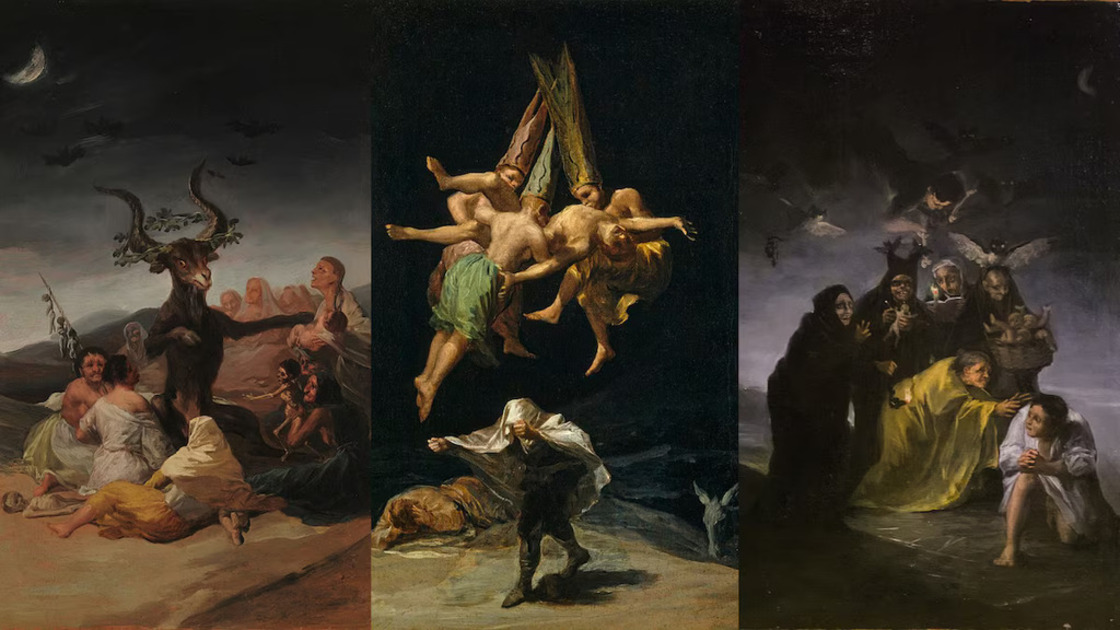
One of Spain’s most notorious witch trials took place in the Navarrese town of Zugarramurdi, partly popularized by Álex de la Iglesia’s film. “About 25% of the population of the Baztán region at the time was considered suspect of witchcraft.” During the Logroño auto-da-fé in 1610, 11 people from Zugarramurdi were condemned to burn at the stake: six still alive and five in effigy, as they had died during the process. Punishments varied from execution to exile, public flogging, confiscation of property, or public humiliation.
Humiliations and torture
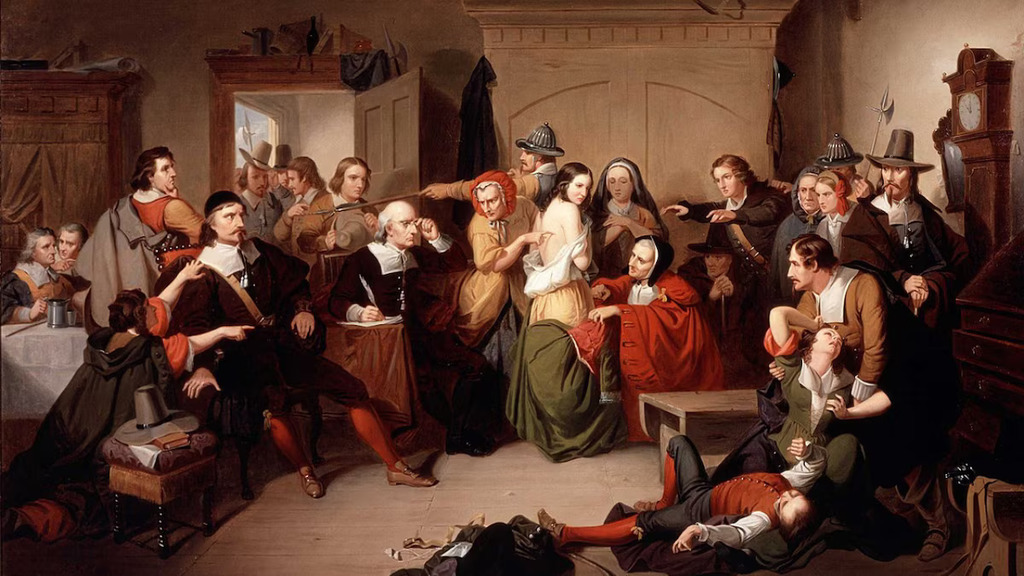
The accused were often subjected to degrading and painful torture aimed at forcing them to confess to crimes they had not committed. “There are deeply sad cases of women tortured by their own families, like Gracia de Berrotarán, whose aunt and mother burned her with a candle to make her confess,” explains Nausia.
Common torture methods in Europe included piling heavy stones on the chest, forcing victims to drink several liters of water, sleep deprivation, and physical tortures that could result in death without any confession. One infamous test to determine if a woman was a witch was the “swimming test”: the accused would be tied to a chair and submerged in water — if she floated, her magic was deemed responsible, so she was burned at the stake; if she sank, she was innocent but died anyway.
Women accused of serving the Devil suffered countless humiliations, such as “virginity tests” (to check if they had engaged in sexual relations with demons) or full-body shavings, as it was believed magical marks or amulets hidden in their hair proved their ties to Satan. In Spain, the Inquisition issued a “silence decree” in 1614, banning any talk of witches after inquisitor Alonso de Salazar y Frías concluded they did not exist and that confessions were obtained through torture. This effectively ended witch trials in Spain, highlighting how victims had fallen prey to mass hysteria.
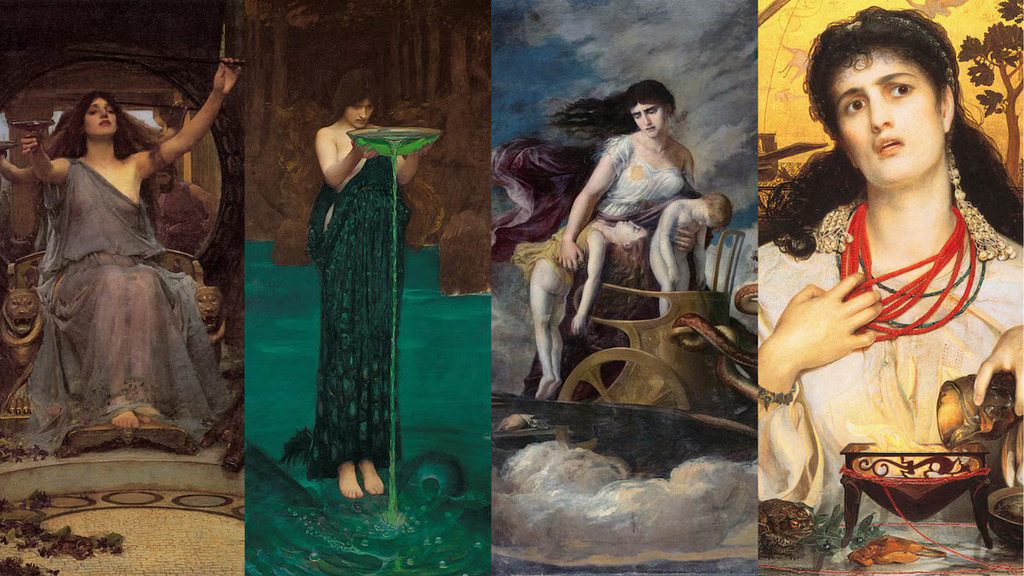
Though witches were a fabricated enemy of a fearful and punitive society, their image has endured throughout history. In Greco-Roman mythology, witchcraft, jealousy, and malice are embodied by sorceresses like Circe — who turned men into animals (including Odysseus’ crew, whom she transformed into pigs) — and Medea, who killed her children and her husband Jason’s new wife out of revenge.
Although the figure of the witch is now largely confined to fairy tales and folklore in many countries, witchcraft accusations still endanger the lives of thousands of women each year — especially those who are poor, elderly, or single or widowed.
In Tanzania, an estimated 500 to 1,000 women are killed annually, burned alive, or mutilated for alleged witchcraft. India recorded 2,500 cases between 2000 and 2016. In 2009, Saudi Arabia’s police formed an “Anti-Witchcraft Unit” to combat “the evils of magic,” leading to the execution of Amina Bint Abdul Halim Nassar in 2011. Similar persecutions have been documented in the Democratic Republic of the Congo, Angola, Nigeria, Papua New Guinea, and Nepal, among others.
Despite the United Nations’ efforts to curb this large-scale femicide, thousands of women continue to fall victim to accusations that should have been left in the past. This ongoing violence remains a brutal reminder of the weight of misogyny — a burden that must be eradicated.


