

On April 18, 2005, musician Andrés Calamaro appeared before Argentina’s Federal Oral Court No. 1 in La Plata—just hours before his return to the Argentine stage after a five-year hiatus. That afternoon, he was acquitted in what had become one of the most absurd court cases in Argentina’s legal history: he’d been charged with “promoting drug use.”
Exactly 20 years ago. It was around midday at the federal courthouse in La Plata. Judges Horacio Isaurralde, Ana Aparicio, and Carlos Rozanski, prosecutor Carlos Dulau Dumm, defense attorney Albino “Joe” Stefanolo, and Calamaro himself were all part of this bizarre courtroom drama. The man behind the case, lawyer Alejandro Granillo Fernández—perhaps anticipating how ridiculous it would all look—didn’t show. In a written statement, he cited work commitments for his absence.
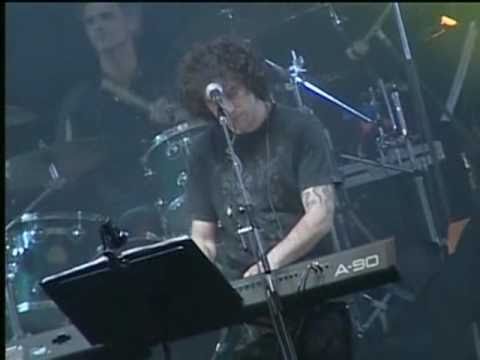
The trial was over in a flash. A witness was called but added nothing. Then came the closing arguments. Prosecutor Dulau Dumm dropped the charges and asked for the rock star’s acquittal: “Rather than inciting others, Calamaro simply expressed a personal desire,” he said. He called the remark “inappropriate,” but emphasized that saying something isn’t a crime. The statement in question, delivered in front of tens of thousands of people, was: “I’m feeling so good right now I could smoke a little joint.”
Dulau Dumm even apologized to Calamaro on behalf of the justice system for dragging the case out so long. Just 30 minutes later, Judge Aparicio announced the court’s decision: not guilty.
It had been 3,805 days since that Saturday, November 19, 1994. Ten years, five months, and one day of Calamaro being tangled in a legal nightmare for uttering the word “joint.” It all started when a “concerned parents group” led by Granillo Fernández got offended and filed a complaint, accusing the singer of violating Argentina’s drug law—Article 12 of Law 23.737—which calls for two to six years in prison for “publicly promoting or inciting drug use.”

F: 13-05-2023
P: Andrés Calamaro
L: Pamplona
T: Concierto. Baluarte
But then came Andrés Calamaro—the headliner. He asked for a chance to settle things down. He walked onstage wearing a t-shirt that read “I Have AIDS Too” and took his spot in front of the keyboard with his band Los Rodríguez. Just nine minutes into the set, before singing the first line of “Mi rock perdido,” he leaned into the mic and said: “I’m feeling so good I could smoke a little joint,” and added, “Don’t tell me there’s not at least one person out of 100,000 holding.”
It worked. Like a magician, Calamaro diffused the chaos with one phrase. The crowd, filled with young people who were secretly smoking weed—at a time when just having a joint in your pocket could land you a drug charge—settled down. The rest of the show turned into a celebration. The only things flying through the air now were the people themselves, crowd-surfing.
Back in 1994, just saying the word “joint” was seen as immoral and provocative. Cannabis wasn’t viewed as a potential legal industry like it is today. Back then, it was demonized—linked to crime and said to lead to harder drugs. A whole set of myths cast marijuana as a dangerous gateway, and any public mention of it could land you in hot water.
While recording music for the film Caballos Salvajes, Calamaro learned that a politician from La Plata had reported him for “encouraging” drug use. And just like that, he spent the next decade under investigation—over a single word.
Calamaro wasn’t new to trouble with the law over drugs. Back in 1978, when he was just 17, Argentina’s Federal Police detained him and two bandmates from the group Raíces—Beto Satragni and Pepe Luis—for possession while they were walking down Avenida Corrientes. They spent the night in a cell. “I almost shit myself,” Calamaro recalled in the book Marihuana: La historia.
Since he was a minor, police let him go. He called a number from memory—given to him by Satragni—which connected him to lawyer Albino “Joe” Stefanolo. Joe, a long-haired oddball in the traditional legal world, showed up at the precinct and got them out. That marked the beginning of a lifelong friendship between the rocker and his legal guardian angel.
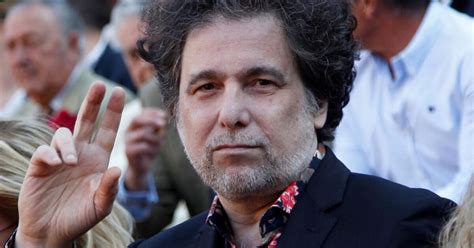
Two decades later, Calamaro and Stefanolo reconnected for a documentary by Hernán Siseles. “There had been violence while La Portuaria was playing. Someone threw something at the stage and hit a band member,” Stefanolo remembered. “They were about to cancel the event. Andrés said no, he could calm the crowd—and he did.”
“I just wanted to connect with the audience,” Calamaro said. “I remembered Tierno Galván, the mayor of Madrid, who once told a crowd, ‘Stay sharp, and get wild.’ If there was going to be a phrase remembered from that night, it had to be that one.”
Even in those prohibition-heavy days, the case against Calamaro was absurd. According to a top judge in La Plata (who chose to remain anonymous), the whole thing was political. Granillo Fernández, aligned with a faction of the Peronist party, allegedly used the case as payback against La Plata’s mayor at the time, Julio Alak—who had organized the festival.
Back in 1988, the UN had passed a treaty requiring countries to criminalize possession, even for personal use. Argentina followed suit the next year with Law 23.737. Only five years later, Calamaro got caught up in this ridiculous prosecution.
In 1990, Argentina’s Supreme Court sent Ernesto Montalvo to prison for having just 2.7 grams of cannabis—about three joints. In 1992, nearly 75% of drug arrests in Argentina were for less than three grams.
Two years after Calamaro’s concert, Judge Humberto Blanco dismissed the case. But it didn’t end there. A divided Federal Appeals Court allowed it to move forward, leading to the oral trial more than a decade later.
In 1997, Calamaro released his hit album Alta Suciedad. Track 4? “Loco,” with the now-iconic lyric: “Sit in a park and smoke a little joint.”
“None of the judges wanted to rule on it,” Stefanolo said. “Convicting him was embarrassing. Acquitting him was embarrassing too. That’s why it dragged on for so long. Andrés even had Interpol show up at his shows.”
“They came to the Gran Rex Theater,” Calamaro recalled. “Since I didn’t have a permanent address in Buenos Aires, they showed up there. Later, they knocked on my door in Madrid to check if I was living there.”
When he moved to Madrid, Calamaro often returned to Argentina without much concern. “Let’s just say I took full advantage of my privileged status,” he admitted in Marihuana.
So, on April 18, 2005, the Federal Court in La Plata finally put him on trial. By nightfall, Calamaro was scheduled to perform at Luna Park—his big return to the Argentine stage.
He showed up to court with a scruffy beard, a gray shirt, sneakers, and the support of hundreds of fans outside. Judge Aparicio asked if he had any other criminal cases. “Not that I remember,” he replied with a smirk.
“It was crazy,” Calamaro later told Siseles. “I had to wake up early to go to La Plata before my first show in five years. The judge dropped the case, apologized—and asked for an autograph. That’s Argentina for you.”
For Stefanolo, the case highlighted the absurdity of the justice system. “We refused to settle. Andrés was clear—he didn’t commit a crime. He’s got principles. He never saw this as anything but a joke.”
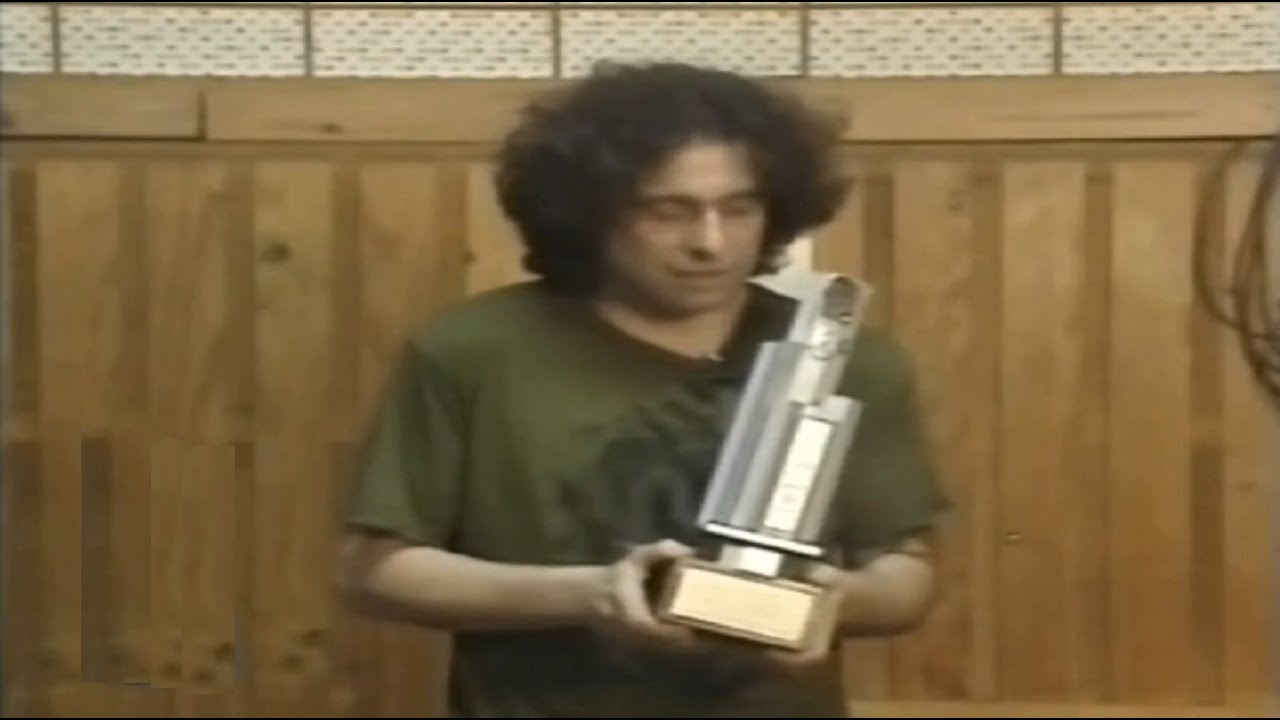
Calamaro agrees the case left a mark. “Joe told me that what was just an inconvenience for me could be a real problem for someone else—a schoolteacher or a doctor advocating for medical marijuana. Maybe it was a waste of time and money, but I think it helped move the conversation forward. We added some honesty to the cultural dialogue—and that, in its own way, helps society grow.”


