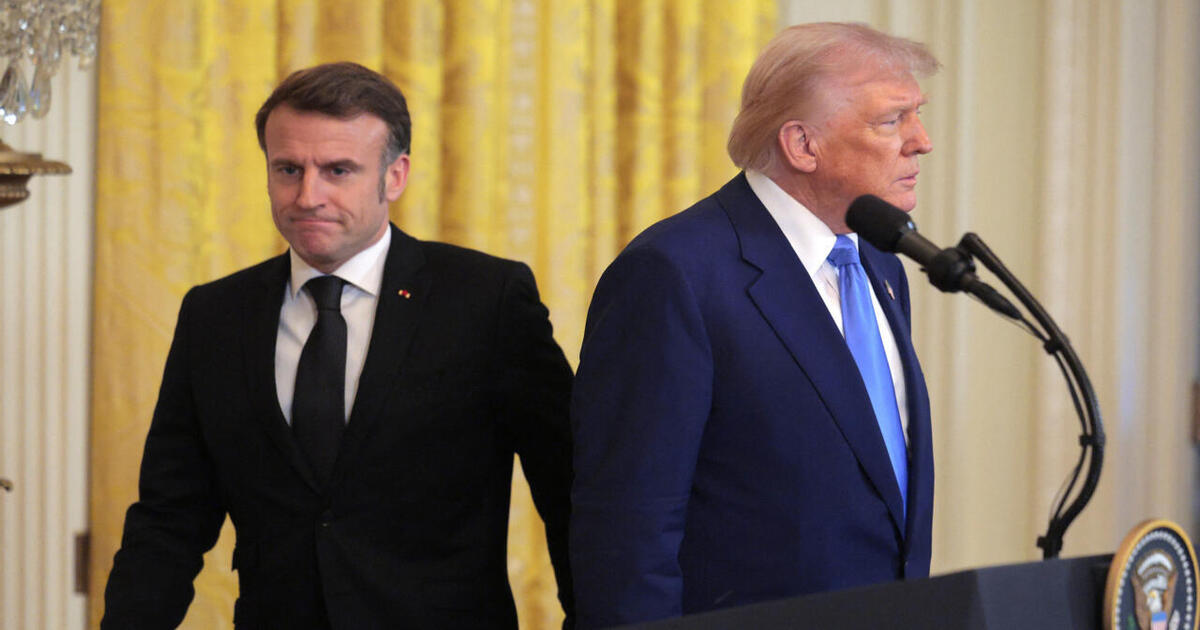
Amid one of the most intense diplomatic standoffs of the year, French President Emmanuel Macron and former U.S. President Donald Trump have once again clashed publicly—this time over the escalating conflict between Israel and Iran. Their war of words, sparked during a tense G7 summit, highlights the stark contrast between two visions of global leadership and foreign policy.
A Conflict Ignited
During the summit, Macron stated that there was “a ceasefire offer on the table” regarding the Israel-Iran confrontation, signaling that diplomatic solutions were still possible. The comment was met with hostility by Donald Trump, who accused the French leader of “seeking attention” and “having no clue” about the situation. On his social media platform Truth Social, Trump went further, declaring:
“Emmanuel is always wrong.”
Macron’s response was sharp, yet restrained:
“Some leaders change their minds, but that’s not the case with me.”
It was a subtle yet pointed remark—both a defense of his consistency and a veiled critique of Trump’s often erratic political behavior.
Two Worldviews Collide
This isn’t the first time Macron and Trump have locked horns. During their overlapping terms in office, they represented opposite poles on key issues:
-
Multilateralism vs. Unilateralism: Macron has championed international cooperation and the role of institutions like the UN. Trump, by contrast, often bypassed allies and institutions, withdrawing from the Paris Climate Accord and the Iran nuclear deal.
-
European Autonomy vs. American Primacy: Macron advocates for strategic independence in Europe’s foreign and defense policy. Trump believes in America’s dominance and expects allies to fall in line—or face consequences.
-
Diplomacy vs. Force: Macron supports engagement and negotiation, even with adversaries. Trump prefers hardline tactics—sanctions, threats, and displays of military strength.
A Fractured G7
What should have been a moment of Western unity at the G7 instead revealed deep internal divisions. Trump’s reported “walkout” from the summit signaled a refusal to engage in multilateral consensus-building. His decision to lash out at Macron afterward only widened the rift.
What’s at Stake?
Beyond personal jabs, the Macron-Trump exchange symbolizes a larger battle for the soul of Western leadership. The prospect of war between Israel and Iran risks triggering a catastrophic regional or global conflict. In such volatile conditions, voices like Macron’s—calling for de-escalation and diplomacy—could be vital.
But this is also a battle for credibility. Should the international community follow leaders who shift their positions based on politics or personal whims? Or is it time to support principled leadership that favors consistency and peace, even when unpopular?
History will decide. For now, Macron’s words echo loudly:
“Some leaders change their minds, but that’s not the case with me.”
A personal statement, yes—but also a broader call to rethink what real leadership looks like in a fragile world.


