

Known in life as “the Living Skeleton,” Isaac Sprague became a familiar figure in 19th-century sideshows. But behind the fame and public fascination with his emaciated appearance lay a quiet battle with a disease few at the time could understand: a severe form of progressive muscular atrophy.
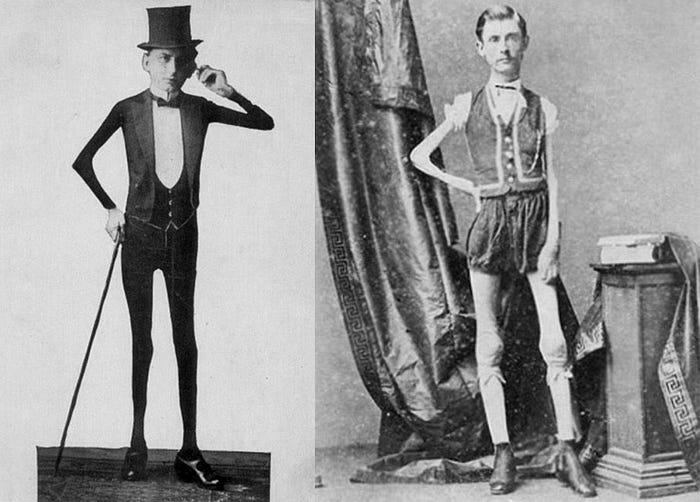
Born in 1841 in East Bridgewater, Massachusetts, Sprague had a seemingly normal childhood. According to records and eyewitness accounts, it wasn’t until the age of 12 that he began to lose weight rapidly and inexplicably. Despite eating regularly, his body failed to retain fat or build muscle.
Over time, he became so thin that his bones were visibly outlined beneath his skin. By adulthood, Sprague stood 5 feet 6 inches tall and weighed just 43 pounds (around 19.5 kilograms). With medical knowledge limited at the time, his condition went undiagnosed and was often viewed with curiosity rather than clinical concern.
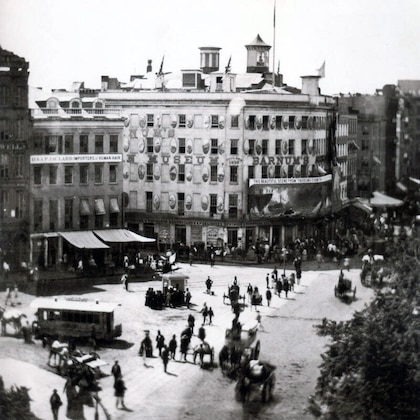
Unable to find traditional employment due to his appearance and frailty, Sprague turned to the only available option: joining traveling “freak shows.” He was eventually hired by famed showman P.T. Barnum, becoming one of the main attractions on the circus circuit.
Despite the spectacle that surrounded him, Sprague lived a private life off-stage. He married and had children, using his income from performances to support his family. Throughout his life, he maintained a normal appetite and actively sought answers to his deteriorating condition.
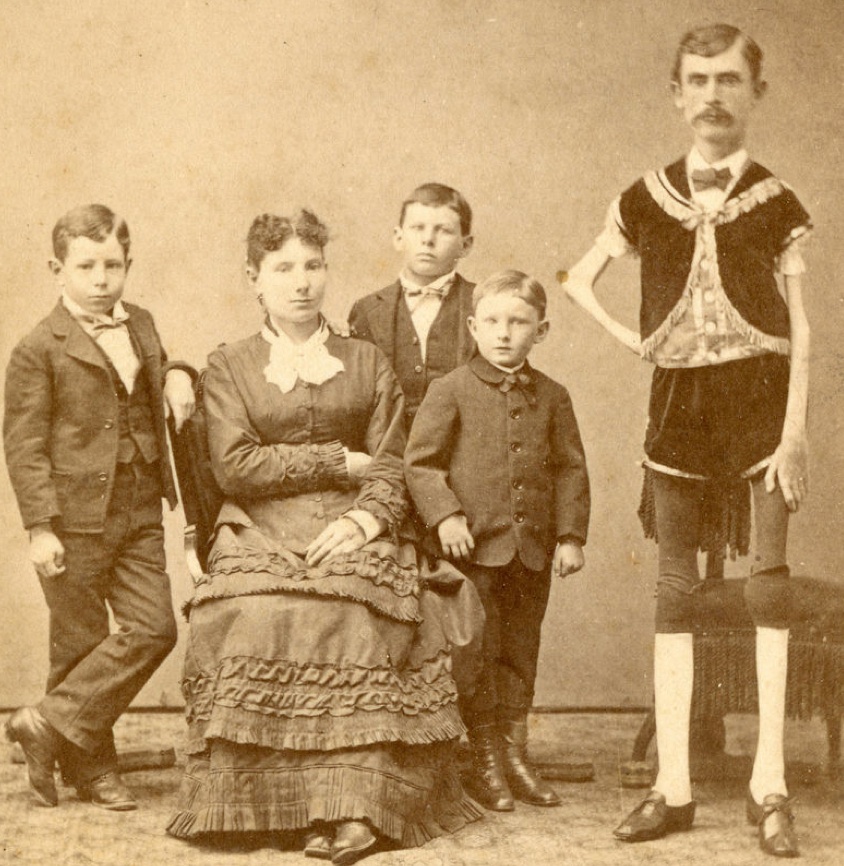
In a remarkable final act of clarity and self-awareness, Sprague sold the rights to his body to Harvard University before his death in 1887. He understood that his unique physiology might offer insights to medical science.
Today, it is believed that Isaac Sprague suffered from a rare and aggressive form of progressive muscular atrophy—possibly related to motor neuron diseases such as amyotrophic lateral sclerosis (ALS) or a severe variant of muscular dystrophy. Though his case remains unusual, it helped spark deeper interest in the study of neuromuscular disorders.
Isaac Sprague was not merely a curiosity of the 19th century. He was a man who, in the face of social stigma and scientific uncertainty, made a conscious decision to leave a legacy. More than a century after his death, his story continues to resonate—raising questions, inviting compassion, and reminding us of the often-overlooked lives behind the medical mysteries.


