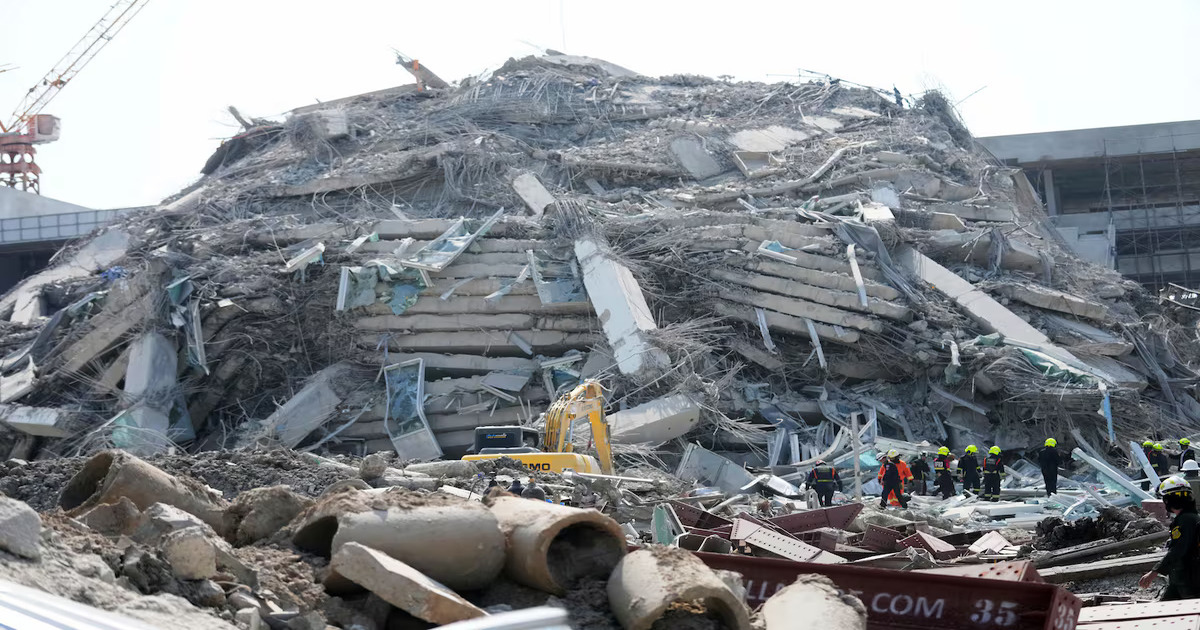

Chiang Rai / Bangkok / Yangon, March 29, 2025 — A powerful 6.1-magnitude earthquake shook northern Thailand and border regions of Myanmar (formerly Burma) on the night of March 28, leaving more than 700 people dead and hundreds more injured or missing. Rescue teams are working around the clock amid collapsed buildings and widespread devastation.
So far, 694 deaths have been confirmed in Myanmar, along with six in Bangkok, Thailand’s capital, where the initial toll of ten fatalities was revised by authorities this morning. However, the death toll is expected to rise significantly. A projection by the United States Geological Survey (USGS) suggests that the number of fatalities could exceed 10,000, given the scale of destruction and the high number of people still unaccounted for.
Scenes of Destruction and Determined Rescue
The earthquake struck at a depth of 10 kilometers, with its epicenter in Chiang Rai province, Thailand. Tremors were felt across several Southeast Asian countries. Emergency response teams in both Thailand and Myanmar worked through the night, using heavy equipment and, in many cases, digging through rubble by hand in a desperate search for survivors.
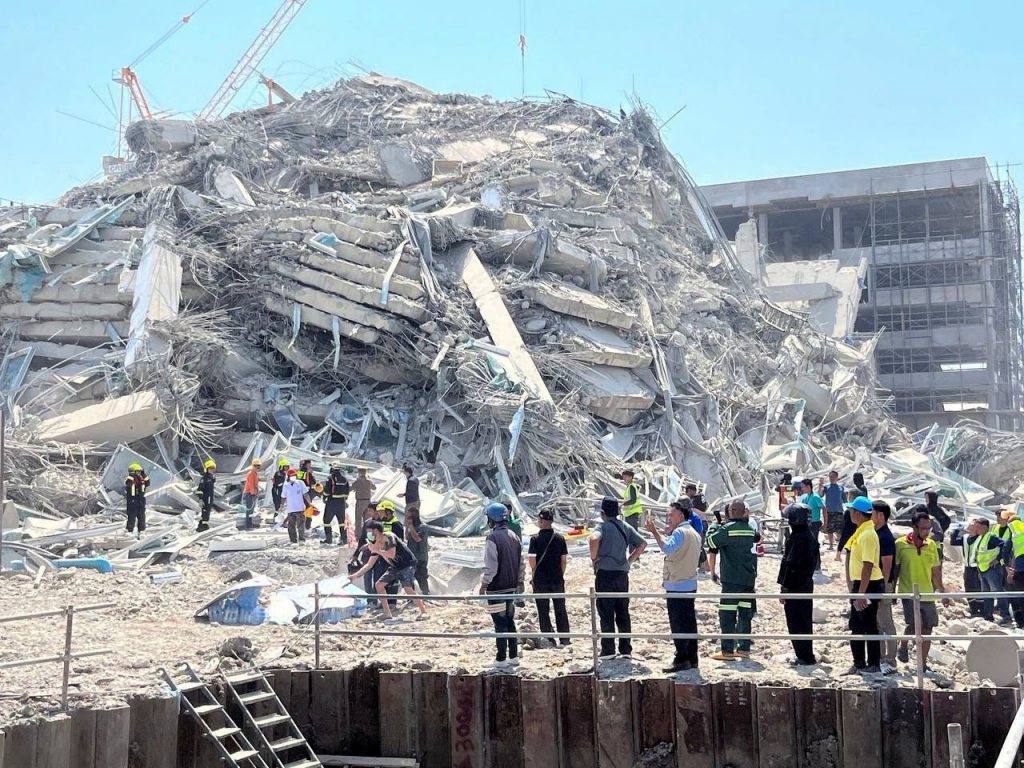
In Chiang Rai, several villages have been completely cut off.
In Bangkok, although structural damage was limited, widespread panic triggered mass evacuations from high-rise buildings and office towers.
In Myanmar, entire communities have lost access to electricity, water, and basic communications.
Regional and International Response
Thai Prime Minister Srettha Thavisin has declared a state of emergency in the most severely affected areas and activated a national disaster response plan. International aid is already being mobilized: Japan, Australia, the United Nations, and the Red Cross have pledged logistical support, rescue teams, and humanitarian assistance.
Political Context in Thailand and Myanmar
The disaster comes at a politically sensitive time in Thailand, where a fragile civilian government has been in power since 2023. The ruling coalition, led by the Pheu Thai party and backed by military-aligned factions, faces growing public dissatisfaction and protests. The government’s response to the earthquake will likely be scrutinized in the coming weeks.
In Myanmar, the situation is even more complex.
Myanmar is one of the poorest countries in Asia and has been in turmoil since the February 2021 military coup. The Tatmadaw (military) ousted the democratically elected government of Nobel Peace Prize laureate Aung San Suu Kyi, and it does not maintain control over the entire country. Many regions are under the de facto rule of opposition militias and armed groups, which will likely hinder the delivery of humanitarian aid. This fragmented control also complicates the collection of reliable information about the earthquake’s true impact.


