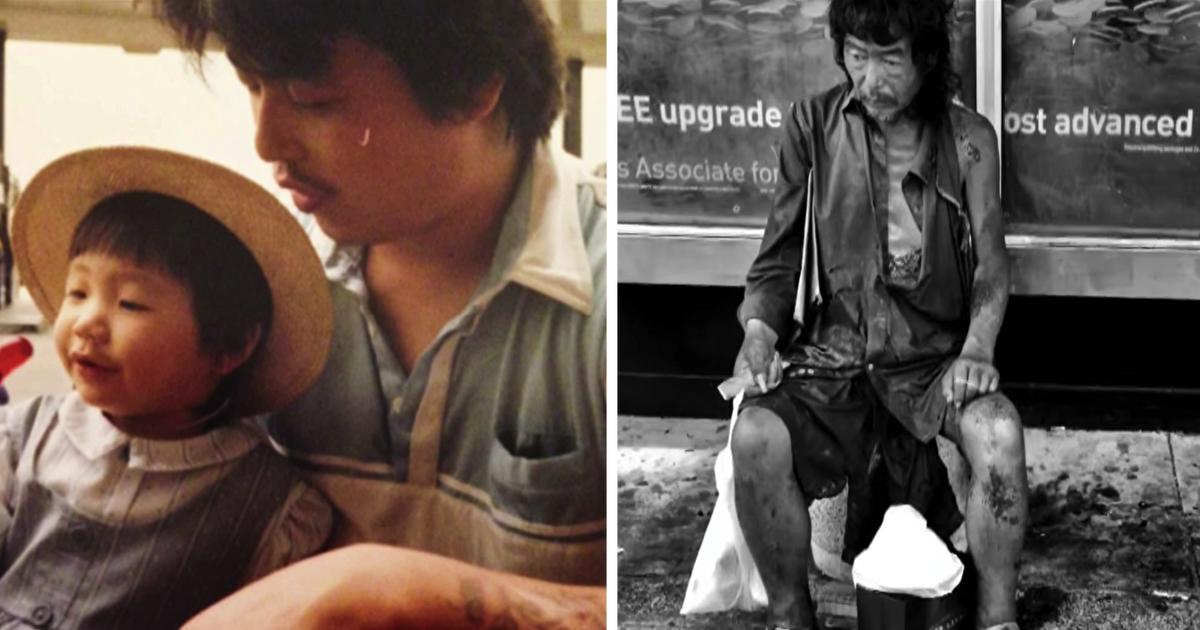
One day, while taking pictures of homeless men and women on the street, I made a startling discovery.
Her father was one of the men she played.
According to NBC, Diana’s parents divorced when she was five. It was difficult for Diana and her mother. They spent time living in their car or staying with friends and relatives. Diana’s father is no longer in the photo. disappeared from his life.
This experience inspired Diana to overcome the plight of others who found themselves on the streets through no fault of their own.
In college, I started photographing these homeless people. She understood how they felt and wanted to shine a light on a group of people who are often overlooked or forgotten.
She was in Honolulu when she came face to face with her father. Shocked, I tried to communicate with him, but he couldn’t or couldn’t communicate with her. His physical and mental condition deteriorated.
Diana repeatedly tried to talk to him, but he ignored her.
Diana was not ready to give up. She saw that her father was in bad shape. She wanted to help him. Time and time again, she visited him. Time and time again it didn’t work. Diana only had his pictures of him.
His father’s health deteriorated. He had a heart attack. Fortunately, someone saw what was happening and called for help. He was admitted to hospital. While recovering, he also received much-needed mental health treatment.
As his mental health improved, Diana tried to reconnect with him.
This time it worked. Diana and her father have managed to bond and work on their relationship after all these years. They eagerly make up for lost time.
Diana thinks this story is not limited to her relationship with her father. It is also about seeing and recognizing the homeless. She wants her story to remind everyone that living on the streets doesn’t have to be dehumanizing or dehumanizing.


