Why Is It Always the Women Who Speak First?
It’s a rhetorical question — but one rooted in history. From Joan of Arc to Cassidy Hutchinson, when hesitation, fear, or complacency have silenced others, it has often been women who stepped forward first, willing to speak and act when it mattered most.
The latest example came last Saturday. In a series of coordinated immigration raids across the American South, federal agents targeted people across all age groups — including schoolchildren and elderly churchgoers. The operations sent shockwaves through immigrant communities and left many feeling vulnerable and afraid.
While most of the region’s professional sports teams remained silent, Angel City FC, a Los Angeles-based women’s soccer club, became the first local franchise to issue a statement. The club acknowledged the “fear and uncertainty” caused by the raids and voiced its support for the affected communities.
One day later, LAFC — Angel City’s co-tenant at BMO Stadium — released a similar statement. Other major sports franchises, including the Dodgers, Lakers, Galaxy, and Kings, made no public comment.
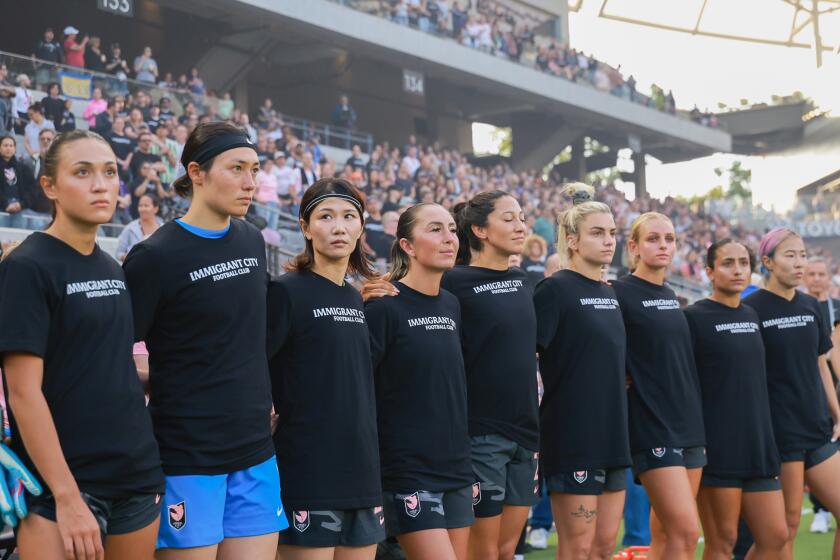
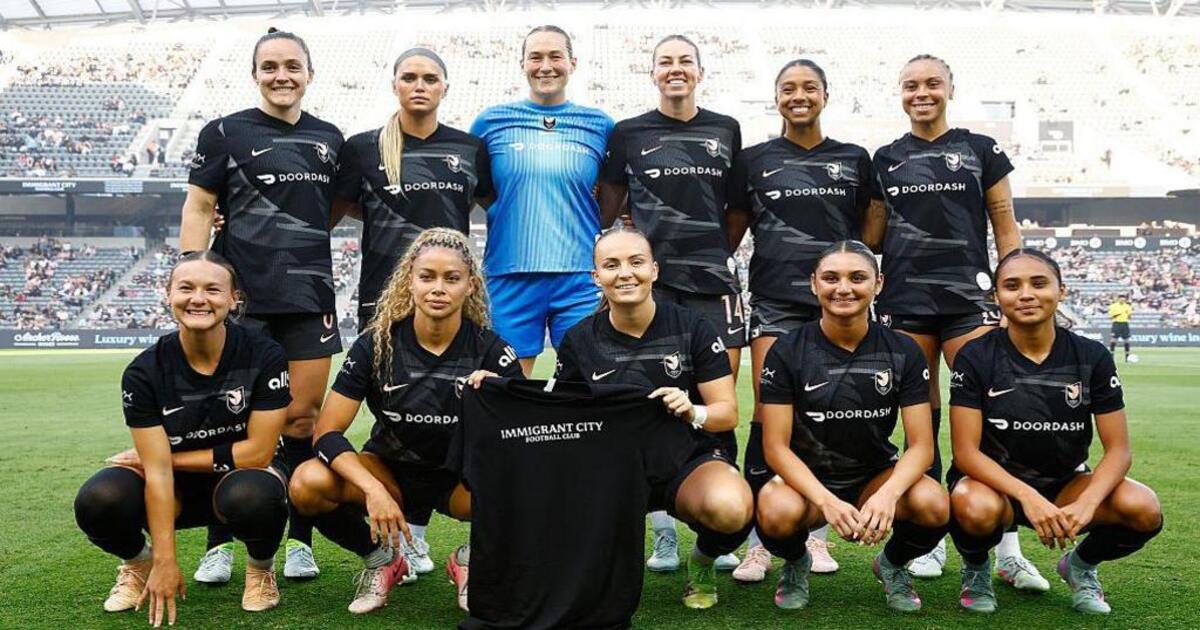
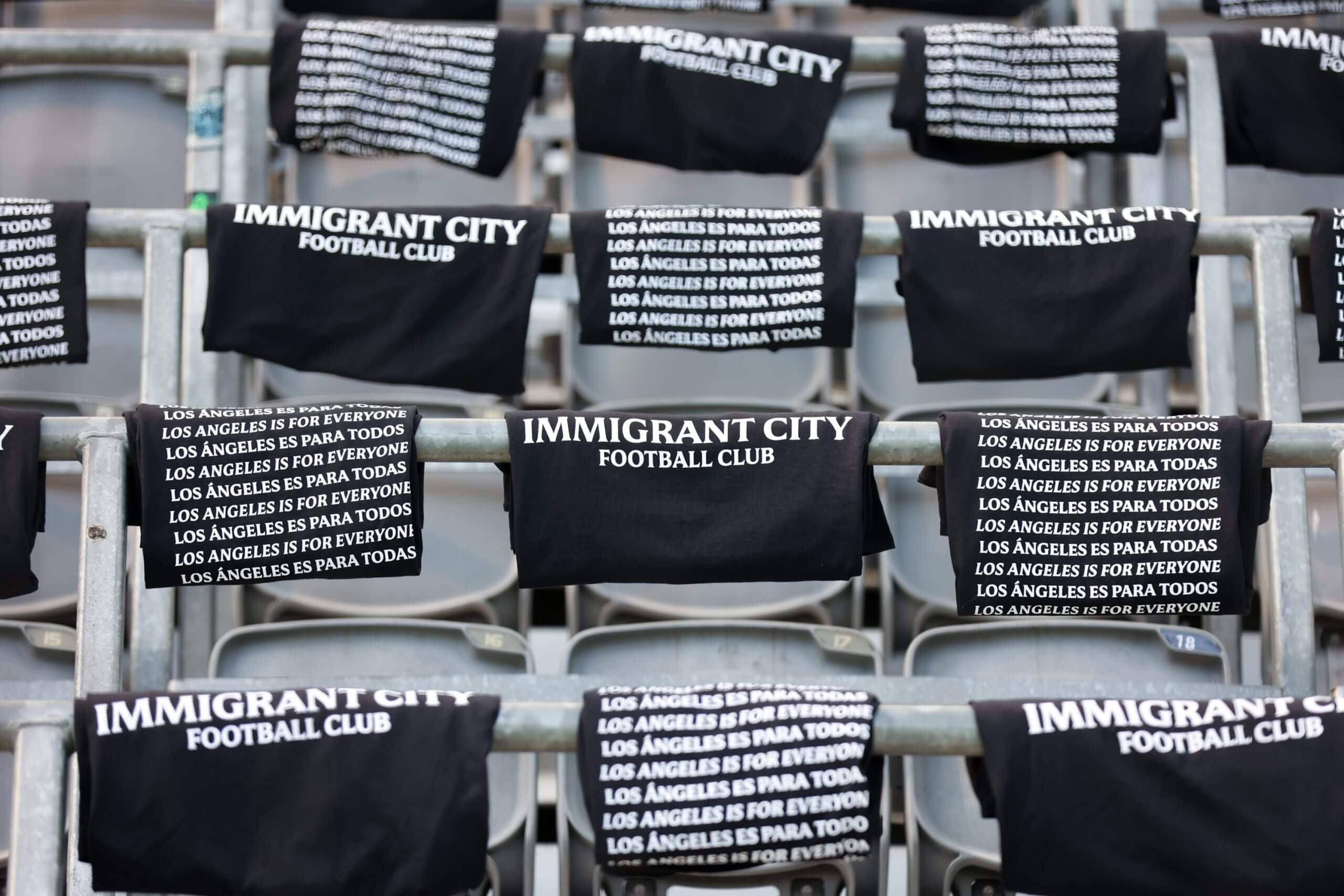
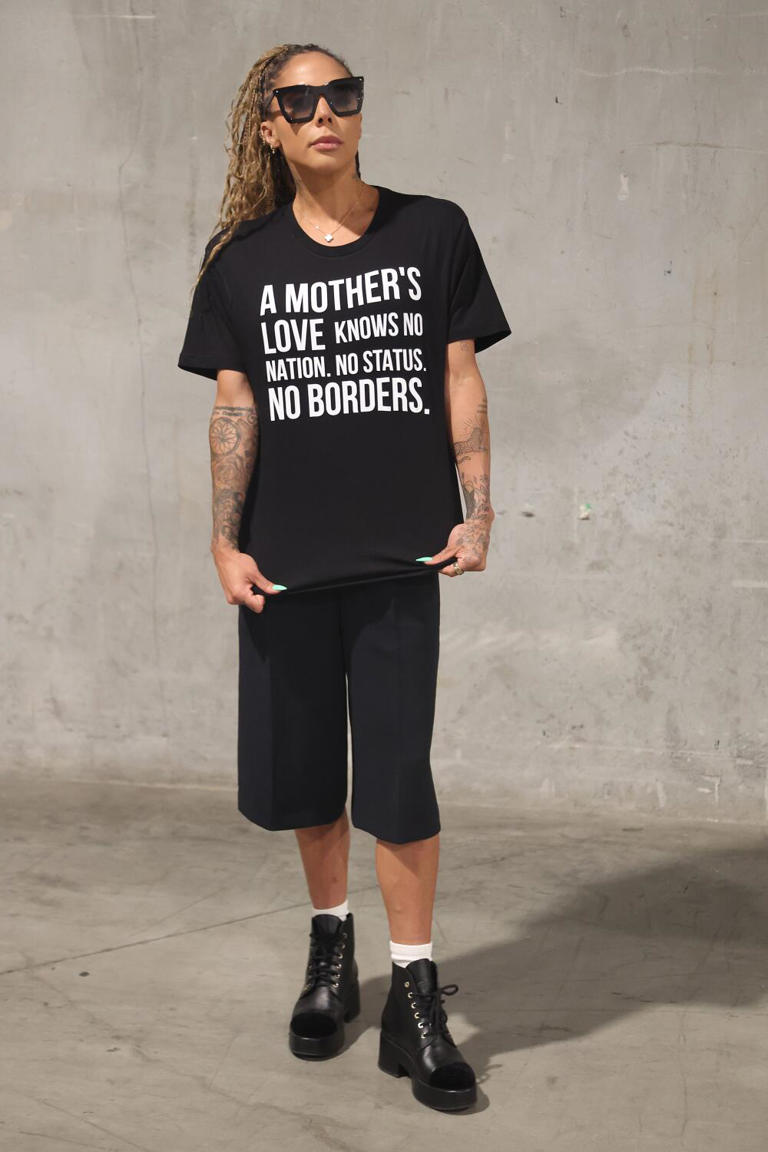
Angel City didn’t stop at words. Days later, the team took the field in custom-made shirts renaming the club “Immigrant City Football Club.” Printed six times across the back was the phrase: “Los Angeles Is for Everyone.”
“The statement was just the beginning,” said Chris Fajardo, Angel City’s vice president of community. “It was our way of making sure our fans, players, and staff felt seen. The next step had to be more than talk — it had to be action.”
Since its founding five years ago, Angel City has built a reputation not only as a competitive club, but as a vehicle for community investment and activism. Backed by Hollywood figures like Natalie Portman, Eva Longoria, Jessica Chastain, America Ferrera, and Jennifer Garner, the club has funneled resources into social programs across Southern California.
So far, those efforts have included distributing over 2.3 million meals, delivering 33,000 hours of youth and adult education, outfitting soccer camps for immigrant children at the U.S.-Mexico border, and investing more than $4.1 million into local community initiatives.
Much of that work has flown under the radar. But last Saturday’s public stance — in a city still patrolled by National Guard troops and Marines — was deliberate, bold, and unmistakable.
“We always said we wanted to build a club that reflected our community,” said Julie Uhrman, Angel City’s co-founder and current president. “But what we’ve built is something more — a club that’s part of the community. Moments like this are when we have to use our platform to highlight what’s happening and tell people: we see you, and we’re with you.”
The idea for the shirts emerged during midweek conversations among staff, players, and fans. By Wednesday evening, Fajardo had a clear plan: produce over 10,000 shirts in time for Saturday’s match.
To make it happen, he turned to Andrew Leigh, president of Los Angeles–based apparel manufacturer Jerry Leigh of California. “We wanted to be involved,” Leigh said. “This was a priority for us. We believe in the cause and in what Angel City represents.”
The initial batch of shirts was handed out to players and fans at the stadium. Thousands more were made for sale online, with net proceeds going to Camino Immigration Services, a nonprofit offering legal aid to immigrants.
For many players, the campaign struck a personal chord.
“My mother’s parents came from China. It wasn’t easy for them,” said team captain Ali Riley. “My dad’s a first-generation American. I was born and raised here. Everything we do, everything we eat, every game we play — this is an immigrant city.”
She continued, “Right now, things feel uncertain. But when I look around the stadium and see those shirts everywhere, it’s a reminder: this is our home. We know who we are, and we know what we believe in.”
The message has resonated with supporters as well.
“They didn’t just say the right thing — they did the right thing,” said Lauren Stribling, a playwright from Santa Clarita and longtime Angel City season ticket holder. “They showed real empathy. It makes me prouder than ever to support this team.”
© (Ian Maule / NWSL via Getty Images)
The contrast with other local franchises has not gone unnoticed. The same night Angel City made its public stand, the Los Angeles Dodgers, just seven miles away, reportedly asked singer Nezza, the daughter of Dominican immigrants, to perform the national anthem in English only — not Spanish.
“I didn’t think I’d be told no — not in a place like L.A., and not right now,” Nezza (real name: Vanessa Hernández) said. “But I just felt like I had to do it.”
Once again, when others stayed silent, women spoke first. Not for attention — but out of conviction.


