

Peruvian Air Force (FAP) pilot Ashley Vargas has been found alive after being missing for more than 63 hours following the crash of her aircraft into the sea. She was discovered by the fishing vessel Señor de la Misericordia, according to her father, who confirmed that she had her phone with her at the time of the rescue.
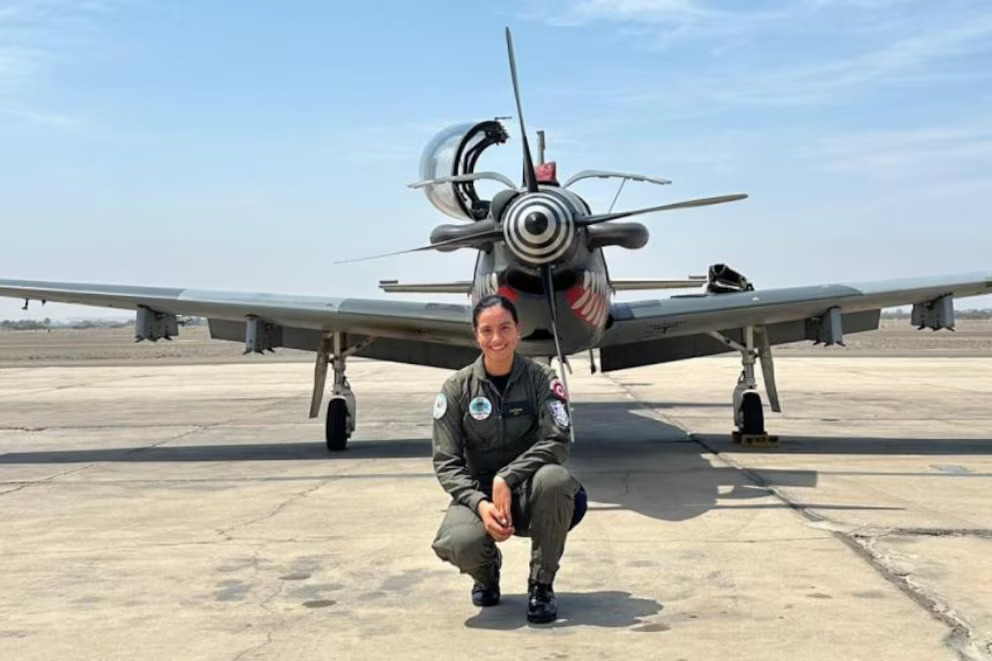
Speaking from the Pisco Air Base, her father expressed immense gratitude for the support received during the harrowing search. “We were informed from offshore that she is about 180 miles away. I’ve been in constant communication with the colonel in charge,” he said, emphasizing the coordinated rescue efforts.

The family was notified of Ashley’s location when the vessel’s owner contacted her aunt in Lima, having obtained her phone number from social media. This crucial call helped confirm the pilot’s survival.
“God is great. My daughter is a warrior,” said her father, emotionally acknowledging Ashley’s strength and endurance throughout the ordeal.
Her uncle, who was traveling with his wife to Pisco upon hearing the news, shared more details. “We received a call from the head of the shark-fishing crew who found her aboard Señor de la Misericordia. She still had her parachute and phone with her,” he said.
Due to the challenging weather conditions and distance, Ashley’s family urgently requested authorities to expedite her airlift. “We ask that helicopters be sent immediately. The boat would take 30 hours to reach the coast,” her uncle Anthony urged. “We understand a helicopter is en route, but perhaps two or three are needed to expand the search radius.”

In Pisco, where her aircraft last made contact, family members and friends gathered to await updates. “We have faith that we’ll find her alive,” her aunt briefly stated, choosing to withhold further comments as new information came in.
Career and Accident Details
Ashley Vargas joined the Peruvian Air Force in 2018 and graduated at the top of her class. In 2022, she was awarded the Sword of Honor by President Dina Boluarte for her academic and professional excellence.
The incident occurred on Tuesday, May 20, at approximately 4:08 p.m., when communication was lost with her KT-1P aircraft, part of Air Group No. 51. Vargas was on her final tactical navigation training mission in the Ica region, just minutes away from completing the exercise.

The Air Force launched an immediate search operation using helicopters equipped with night vision and infrared sensors, as well as a coast guard patrol boat. Dive teams and remotely piloted aircraft (RPA) also joined the mission to expand the coverage area, particularly under low-visibility conditions.
On Wednesday, May 21, at 5:43 p.m., the FAP reported finding wreckage from Vargas’ aircraft on the beach of an islet south of the Paracas Peninsula, between Zárate and Zaratillo islands. This discovery intensified the search, involving land, sea, and air units. The BAP Zimic, a specialized submarine exploration vessel, was also dispatched from Callao to support underwater searches.
As the search progressed with no confirmed recovery, Ashley’s father organized an independent ground search with the help of volunteers using 4×4 vehicles, quad bikes, and other off-road equipment.
As of Friday morning, May 23, no official update had been released by the FAP, despite confirmation from the family that Ashley was alive and awaiting rescue offshore.


