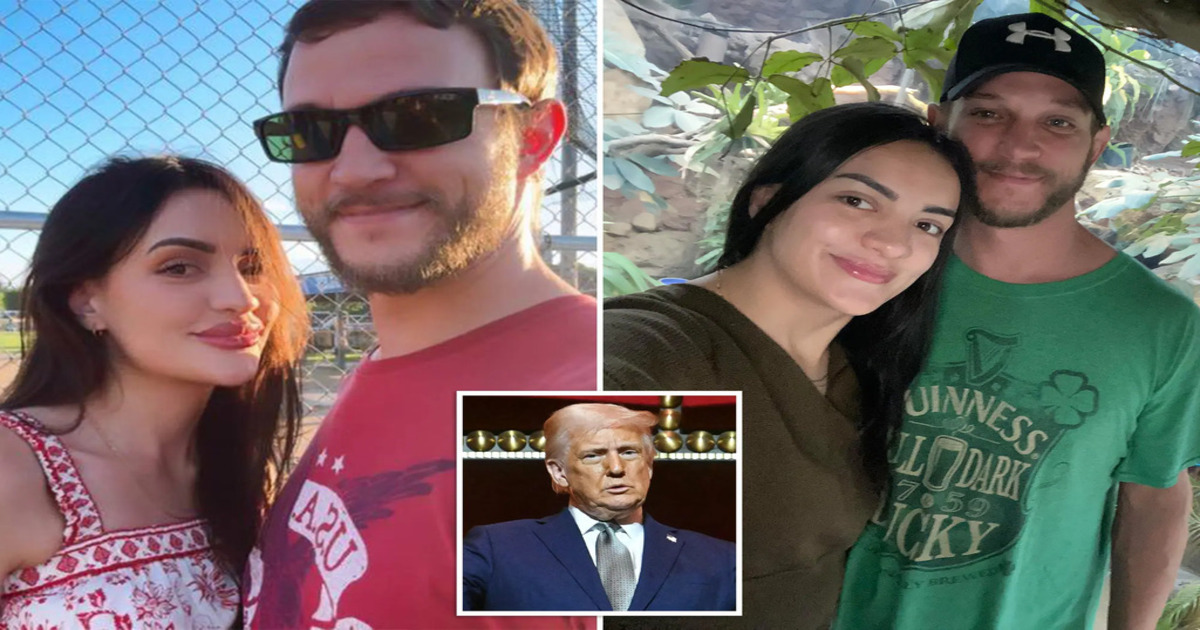

Bradley Bartell, a Wisconsin resident and staunch supporter of former President Donald Trump, finds himself in a personal and political dilemma. His wife, Camila Muñoz, a Peruvian citizen, was detained by U.S. Immigration and Customs Enforcement (ICE) upon returning from their honeymoon in Puerto Rico. Muñoz had overstayed her J-1 visa, initially obtained in 2019 for a work-and-study program, and was in the process of applying for permanent residency in the U.S.
Despite the unexpected situation, Bartell continues to support Trump’s immigration policies. He argues that his vote was intended to curb illegal immigration, particularly for individuals with criminal records. However, he admits that he never anticipated these policies would affect someone like his wife, who has no criminal history and was legally working while awaiting the resolution of her immigration status.
Muñoz’s detention has sparked debate about the enforcement of strict immigration policies and their impact on mixed-status families. Bartell has voiced concerns about ICE’s procedures, calling for reforms to improve efficiency and transparency in the immigration system.
Meanwhile, Muñoz remains in a detention center in Louisiana, awaiting a court hearing. Bartell has launched an online fundraiser to cover legal fees and bail, which could amount to $15,000.
This case underscores the complexities and real-life consequences of stringent immigration policies, especially when they impact U.S. citizens and their families. Bartell and Muñoz’s situation raises broader questions about the balance between national security and humanitarian considerations in immigration enforcement.


