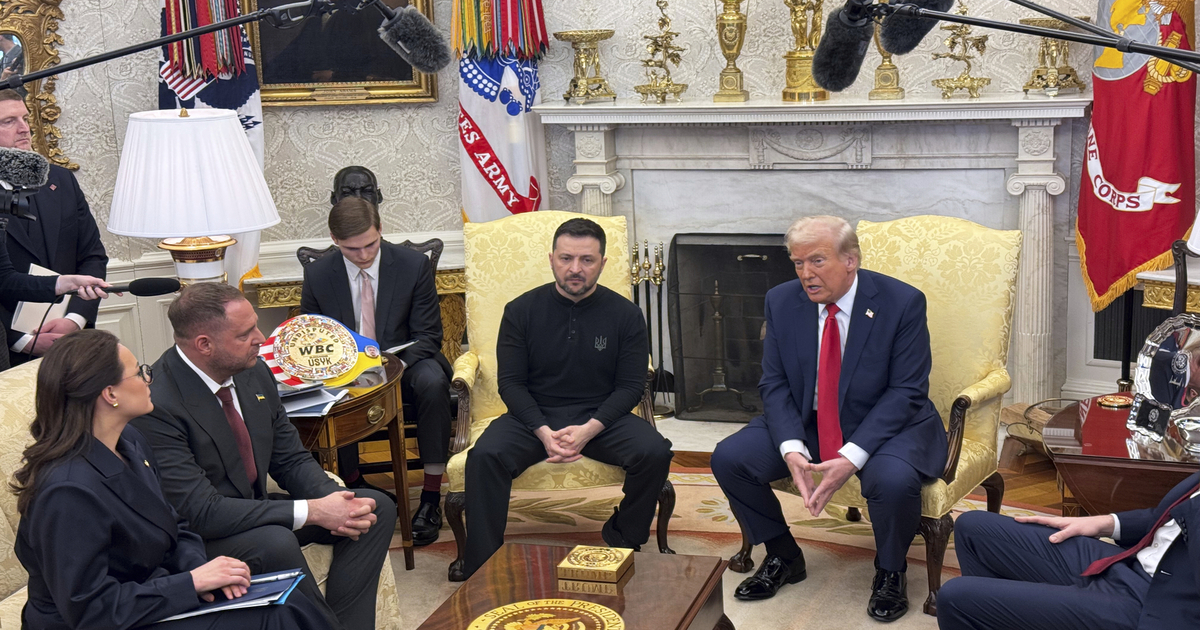
The recent meeting between the President of the United States, Donald Trump, and the President of Ukraine, Volodymyr Zelensky, was marked by moments of high tension that have sparked international concern. The meeting, which was supposed to focus on U.S. support for Ukraine in its conflict with Russia, ended up being a stage for reproaches, threats, and even disparaging comments about the Ukrainian leader’s appearance.
First Threat: Accusations of Provoking a Third World War
One of the most critical moments of the meeting occurred when Trump accused Zelensky of “playing with the possibility of a third world war” due to his firm stance against Russia. This public statement, made in the Oval Office, surprised many and highlighted the growing pressure from the U.S. administration for Ukraine to seek a negotiated solution to the conflict.
Second Threat: U.S. Support Conditioned
In addition to the war accusations, Trump hinted that U.S. support for Ukraine could cease if a peace agreement with Russia was not reached. This warning was backed by Vice President J.D. Vance, who criticized Zelensky for his alleged lack of gratitude toward the aid provided by the United States. This conditionality made it clear that the Trump administration intends to rethink its role in the conflict.
The Impertinent Question About Zelensky’s Suit
The most unexpected and controversial moment of the meeting came when a journalist, aligned with Trump’s stance, questioned Zelensky about his informal attire, asking why he was not wearing a tie or formal suit in such an important place as the Oval Office. Calmly, Zelensky responded: “Do you have a problem with that?” to which the journalist replied that many in the United States did, suggesting a lack of respect for the White House’s dress code. The Ukrainian president firmly concluded that he would wear a suit again when the war ended, perhaps a better or cheaper one than the journalist’s.
International Reactions
The repercussions of this tense meeting were immediate. European leaders expressed their support for Zelensky and showed concern over Trump’s attitude. French President Emmanuel Macron stated that “if there is someone playing at World War III, it’s Vladimir Putin,” emphasizing his support for Ukraine.
On the other hand, Russia welcomed the confrontation, interpreting it as a sign of fracture within the Western alliance. This incident could have significant implications for geopolitical dynamics and the future of Western support for Ukraine in its conflict with Russia.
Conclusion
The meeting between Trump and Zelensky left more questions than answers about the future of U.S.-Ukraine relations. Trump’s threats, the conditions for military support, and personal provocations reflect an increasingly complicated relationship. Meanwhile, Zelensky continues to defend his country’s sovereignty, making it clear that his priority is peace—but not at any cost.


